Tag: affordable housing

How Chicago could maintain its housing affordability status

An op-ed by Steffany Bahamon, Jasmine Omeke and Steven Vance (Abundant Housing Illinois co-leads) published in Crain’s Chicago Business.

Of all the major cities in the United States, Chicago provides the greatest value, with robust amenities and culture without correlated housing costs. But if Chicago wants to retain that status, some things need to change. Rents in Chicago are growing faster than the country’s average, and the inventory of housing for sale in the Chicago area is at an 11-year low. In September, Redfin published data showing asking rents had increased 11% year over year. New construction is lagging, too. When we look at new homes permitted per year in Chicago, we see a sharp drop in the number of permits for detached houses and multifamily buildings in the last three years.

There isn’t enough housing available for the new households moving into Illinois or relocating between cities and neighborhoods. Plus, households today have fewer people, requiring more homes to support the population. The Illinois Economic Policy Institute estimates the state is short 142,000 homes. Recent Census Bureau data shows that Chicago hit a demographic milestone: The city now has more households than ever before, even compared to 1960, when the city had about 1 million more inhabitants.

Compounding the problem is that people’s incomes are not keeping up with rents. In Cook County, wages went up 4% from 2024-2025, and across Illinois they went up only 3.2%.

Household growth and rising rents are clear indicators of demand and evidence of the need for more homes. By increasing the housing supply, Chicago can maintain an affordability that both entices people to live here and makes it practicable to do so. No amenity or cultural offering can compensate for an inability to make ends meet, and a failure to anticipate growth prohibits growth.

The climbing cost of housing is a main reason why 450 people have joined Abundant Housing Illinois, and bringing down costs is why they help in the political fight to show there is support for more housing. In 2025 about 50 Abundant Housing Illinois volunteers from Chicago and Champaign traveled to Springfield on multiple occasions to meet their legislators and talk about this statewide housing shortage. We specifically advocated for HB 1813 and HB 1814, two bills introduced in the state Legislature that would have permitted accessory dwelling units (ADUs), like granny flats and coach houses, across Illinois and two-, three-, and four-unit houses in many municipalities, respectively.

Our volunteers, most of whom live in Chicago and want to stay in Chicago, will again support these, and other bills, in 2026. These two bills, which are necessary to reduce — and yet still insufficient to ameliorate — the housing shortage, did not get approved.

And it’s clear that action needs to happen at the state level because the problem is broader than any one city. The Chicago market for home prices extends across the suburban border, where home prices are also increasing at a similar rate to the city average. Chicago can take unilateral action on housing within its borders. Starting last year, some alderpersons have collaborated with the city’s planning department to proactively upzone neighborhood corridors — on all sides — to allow more housing and allow it to be built sooner. And in September, the City Council adopted a permanent ADU program.

Organizing a sufficient response from the multitude of governments across the Chicago metropolitan area to allow enough housing at the rate that it’s needed is much more difficult. Still, even more permission for new housing isn’t enough. Additional reforms are also necessary everywhere in Illinois: standardizing which fees are assessed and in what amounts; curbing delays and additional costs from project-by-project exactions for perceived impacts that aren’t based on empirical standards; and amending building code requirements, like not always requiring a second stairway, as Seattle and New York City have been doing for decades.

We’ll see legislators in Springfield in the spring to fight for these reforms again. Growth in and around Chicago is counting on them. 

Illinois updates its affordable housing enforcement statute to take effect in 2026

Illinois has a statute that requires every covered municipality to have an affordable housing stock of 10 percent relative to its total housing stock. The Affordable Housing Planning and Appeal Act exempts only municipalities with population of under 1,000, and those “in which at least 10% of its total year-round housing units are affordable, as determined by the Illinois Housing Development Authority”.

IHDA updates a list of non-exempt municipalities – those not achieving the 10 percent standard – every five years, which it last did in December 2023 (the list of non-exempt local governments, or NELGs, and the full list of all municipalities).

List of 44 non-exempt municipalities ordered by lowest percentage of housing stock which is affordable.

Glenview is one of the non-exempt municipalities and this year has “had trouble” approving new housing. Although neither proposed development included affordable housing, to my knowledge, the developer of one proposal said that the project rents would be less than the median; my guess is that most rentals in Glenview are not other apartments but whole houses.

I’ve been keeping a list, on Twitter, of other municipalities that have “had trouble” approving new housing.

One of the updates in the AHPAA adopted in 2023 is that the definition of who can appeal a municipality’s rejection of a proposed affordable housing development has been expanded to, basically, include someone who could have lived in the development if it was built.

The revised definition for appellants also includes housing advocacy organizations that have an overlapping geographic focus. This new appellant definition takes effect on January 1, 2026.

IHDA’s FAQ answer to who is an appellant and can appeal a rejected affordable housing development proposal.

If you know of an Illinois municipality that has voted to reject an affordable housing development, or has through some kind of delay or inaction effectively rejected an affordable housing development, please let me know!

A kludge to build a rental registry in Cook County 

Chicago should have a rental registry, a database of dwelling units that are rented to tenants, for at least two reasons:

  1. The city can know things about the rental units, including how much they cost, where they are, and if any are vacant and could be occupied if only people knew they were available and how to get in touch with the owner.
  2. The city can know who the owners are and contact them to issue citations or advise them, or fill out for them, emergency rental assistance during pandemics and other times of necessity.

Building and administering a rental registry from scratch would be very expensive – probably tens of millions to start and more than one million annually.

I propose a kludge that uses existing databases and modifies existing standard operating procedures amongst a small group of Cook County and Chicago agencies. A kludge is a workaround. It has other meanings and an uncertain etymology.

An ideal rental registry helps solve at least four problems:

  1. Identify who owns a rental home
  2. The number of rental units are in a building
  3. Rental price
  4. Rental unit availability [see my other blog post about counting vacant units]
A 9-unit apartment building in Little Italy is undergoing renovation.

The kludge has four parts

1. Incorporate data about the number of units declared on Real Estate Transfer Tax forms (which in Cook and many other counties are transmitted to the Illinois Department of Revenue digitally).

There is already a city office that reviews or audits these forms looking for instances where the buyer or seller incorrectly claimed certain exemptions from RETT, because of how the city can lose revenue. That office can also enforce that the number of units was correctly entered on the form. 

2. For banks that hold city deposits, amend legislation to require that their newly issued or refinanced mortgages specify the number of units in the required submitted documentation. The ordinance that regulates banks that hold city deposits was amended a few years ago to require that they report how many loans they issue in Chicago for both commercial and residential properties.

Databases 1 and 2 are checks for each other. 

3. “Hire” the Cook County Assessor’s Office to create and operate the database for the unit count data from 1 and 2 (likely as an augmentation of their existing database).

The database would also store any data the CCAO collects through the commercial valuation data they obtain from third party sources as well as from the owners who volunteer it (Assessor Kaegi is already collecting and publicly publishing this information). 

At this point, with features 1, 2, and 3, we are assembling a pretty broad but incomplete record of where rental units are. It will be come more complete over time as properties transfer (sell) and the details of the transfer (sale), and the properties themselves, are recorded.

It doesn’t have a clue as to the rental prices

4. The Cook County Assessor’s Office creates new property classifications. Property classifications allow for the comparison of like buildings for the purpose of establishing assessed values for all properties that are not tax exempt.

One of the most common classifications in Chicago is “2-11”, for apartment buildings with two to six units. This means that, generally, the value of the ubiquitous two-flats and three-flats get compared to other each other and sometimes to four-flats, etc.

I suggest that there should be a few new property classifications, but I have only one idea so far: classify limited equity and Chicago Housing Trust properties differently. 

Bickerdike is one organization that built a lot of limited equity row houses and detached houses in the 1990s and 2000s but I am not aware of a publicly accessible database identifying them.

These houses represent permanently affordable housing and we should have a better system to track them!

This screenshot of part of a spreadsheet is the apartments data that the Cook County Assessor’s Office collected for the 2021 tax year. 

How broad is the kludge?

  • Using the Real Estate Transfer Tax data from 2022 Q1 to Q3, there were 3,550 buildings in Chicago having 22,217 units transferred. (I don’t know how many were arms length transactions, meaning they were sold to new owners.)
  • In the CCAO’s apartments data collected for the Rogers Park Township, there is semi-detailed information about 715 buildings that have seven or more apartments comprising 18,541 units. Details include the unit size breakdown by bedroom count.

Chicago has 556,099 rented dwelling units in buildings with two or more units (according to the ACS 2021 1-year estimate). In my limited analysis I’ve already found data about 7.4 percent of them, and that’s only for part of the city [1].

Notes, limitations, and updates

[1] There may also be duplicates between the buildings in the RETT database and the CCAO apartments dataset.

These databases would not have information about detached (“single family”), single-unit semi-detached (rowhouses and townhouses), and condos used as rentals. This severely limits the coverage of information. As it stands, Chicago Cityscape has data coverage of unit count information for about 37 percent of multi-family (apartment) buildings.

5th Ward Alderperson Desmond Yancy proposed an ordinance that would establish a rental registry (O2023-0004085). The rationale for such is shown in the screenshot below. (Go directly to the ordinance’s PDF.)

Screenshot of the proposed rental registry benefits.

Where Chicago’s community colleges could build housing

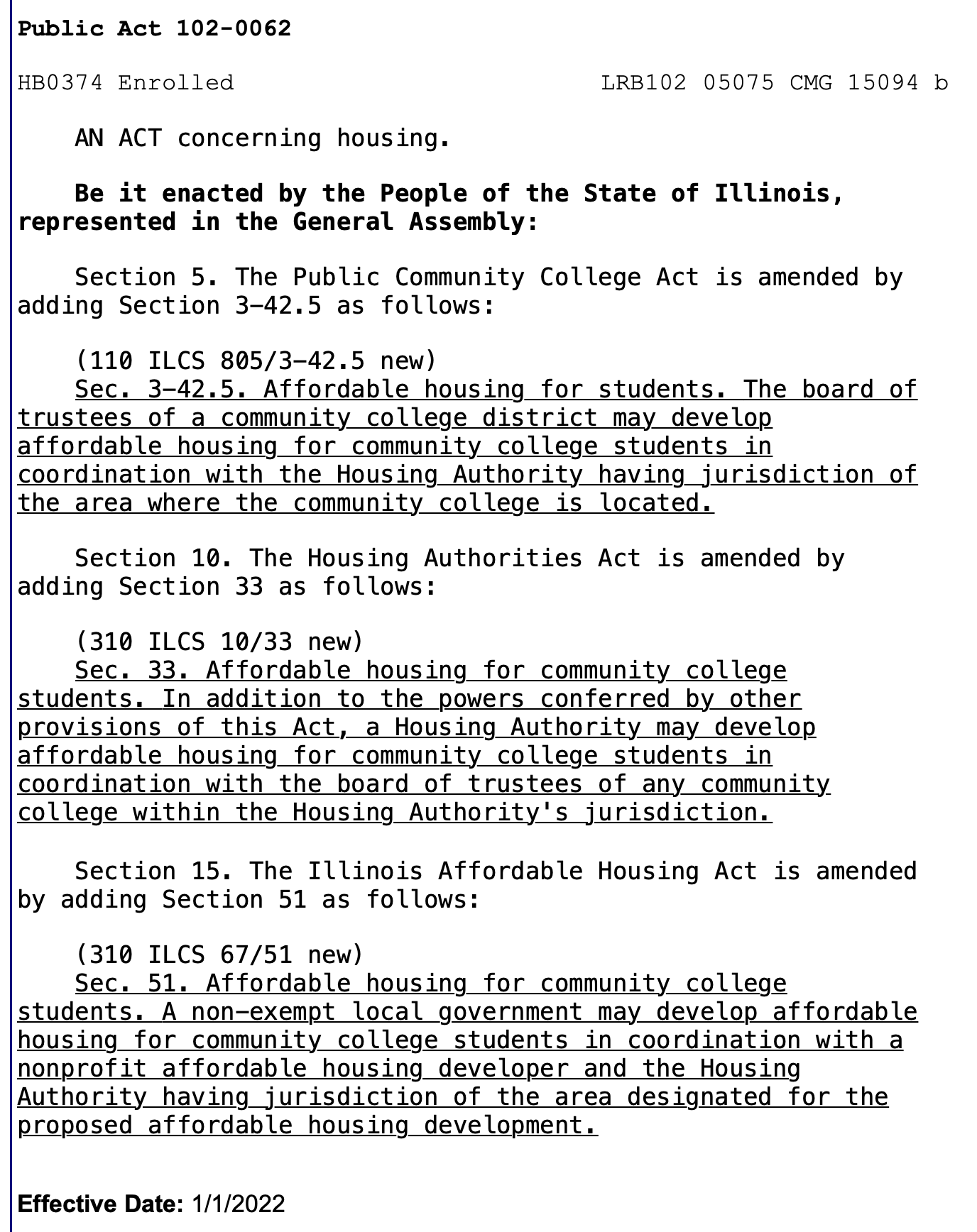
The Illinois General Assembly and Governor Pritzker just gave community college districts in Illinois the authority to work with local housing authorities to develop affordable housing. The bill, HB0374, takes effect January 1, 2022. The text is very short (see the screenshot below or read the bill).

Image

What does this mean for community college districts? It probably means that they can lease their land to the local housing authority for that local housing authority to develop affordable housing for the community college’s students and their families.

The land is essentially free, since it’s already owned by the community college districts and it’s not taxed. Plus, community college districts have their own taxing authority (subject to caps) that can be used to pay for bond-based debt.

Three opportunities in Chicago

I’m going to point out three community college locations in Chicago that could be great places for new and affordable student housing to be built.

Malcolm X College

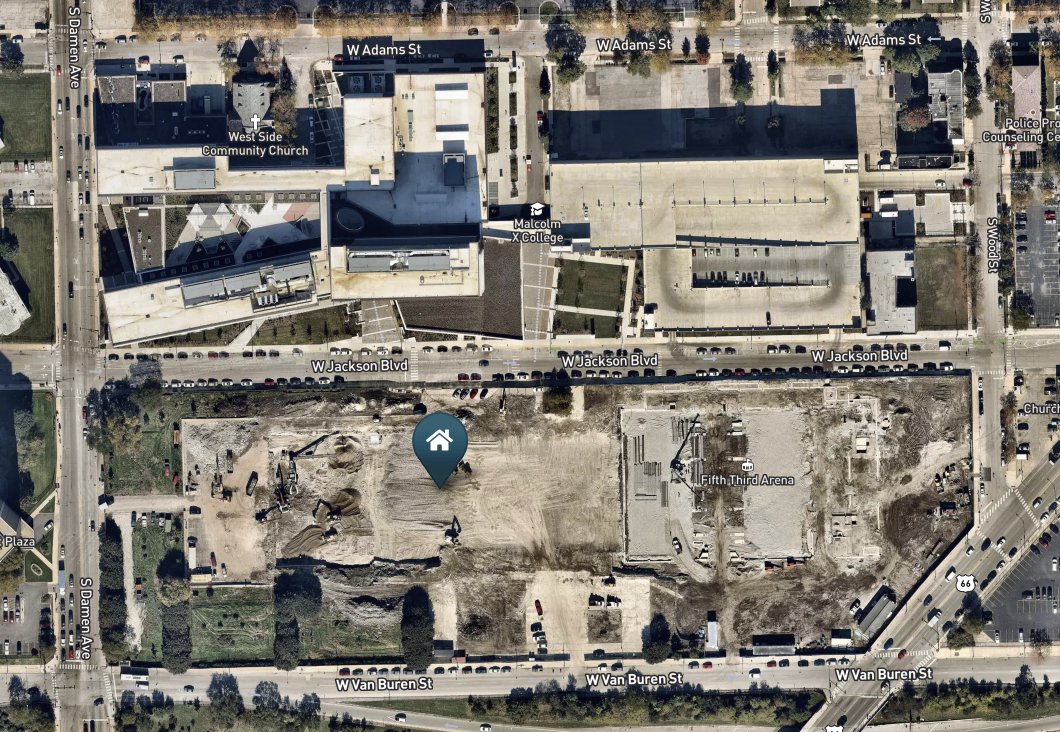
Across from the New Malcolm X college was the original Malcolm X college, and now it’s a huge vacant lot. The Community Colleges of Chicago sold it in 2016 to the City of Chicago, which sold it in 2017 to Rush University Hospital System (which is across the Eisenhower Expressway to the south).

Image
The land across from the New Malcolm X college has been vacant for half a decade.

Welp, Rush also wants to build housing – for unhoused people who use emergency rooms as a way to live and be housed. (People’s health dramatically improves when they have permanent housing and hospitals spend less money on treating them in expensive-to-operate ERs.) Rush and the Chicago Housing Authority could develop housing for both populations – the chronically sick and students – using funds combined with the Chicago community college district.

Additionally, the Jackson bus takes people to and from downtown, and the Blue Line has a station at Illinois Medical District a block away.

Humboldt Park

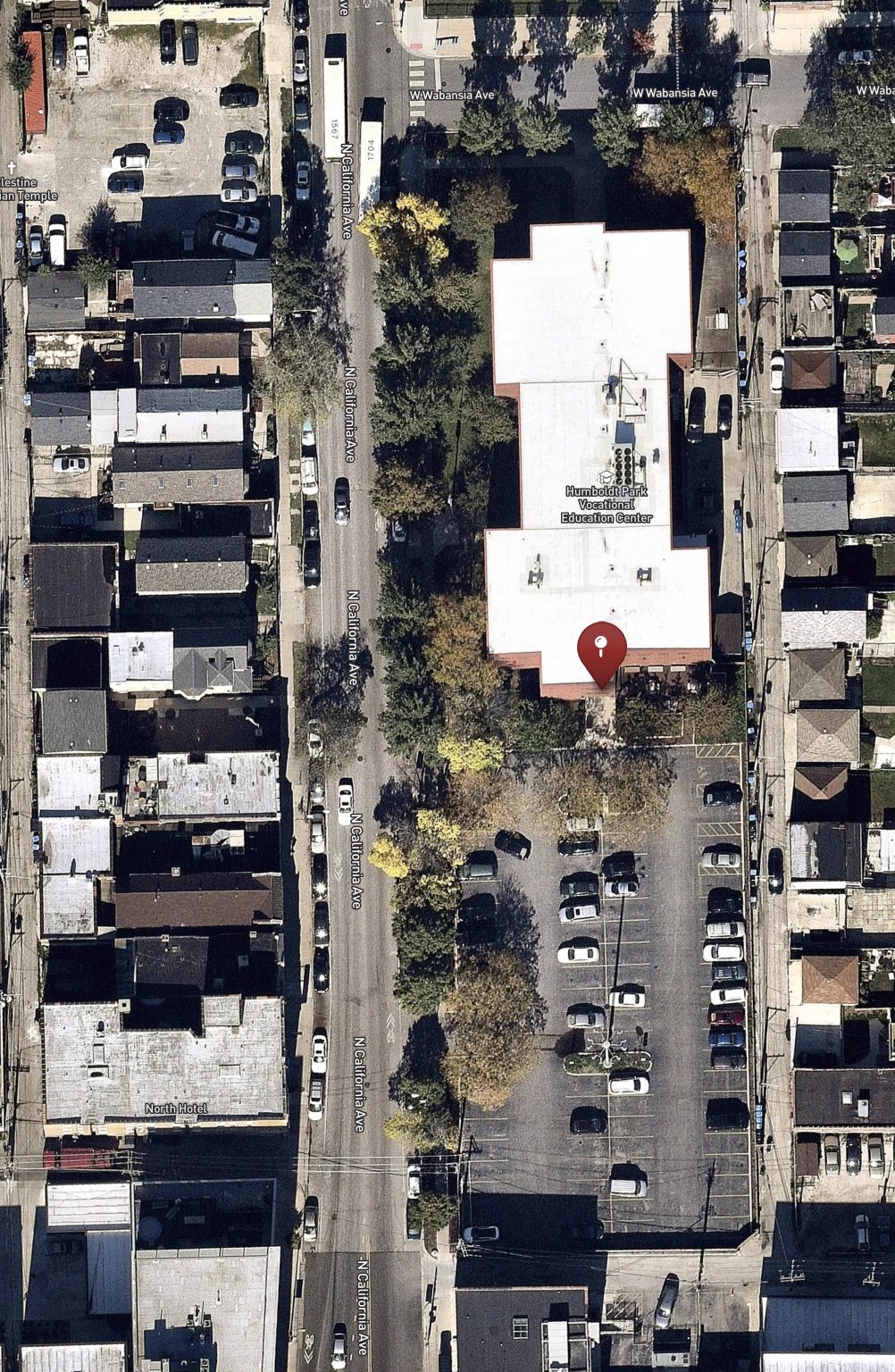
The Humboldt Park Vocational Education Center, which is operated by the Wilbur Wright community college, is another prime location for student housing. The center has a huge parking lot and lies along the California Avenue and North Avenue bus routes.

Image
Humboldt Park Vocational Education Center and its parking lot, which takes up more area than the building.

Parking lots love to be turned into homes, especially in gentrifying areas. That’s free land in a high-demand area where rent is north of $1,200 for a 1-bedroom apartment (I’m using HUD’s Fair Market Rent for the 60647 ZIP code).

Dawson Technical Institute

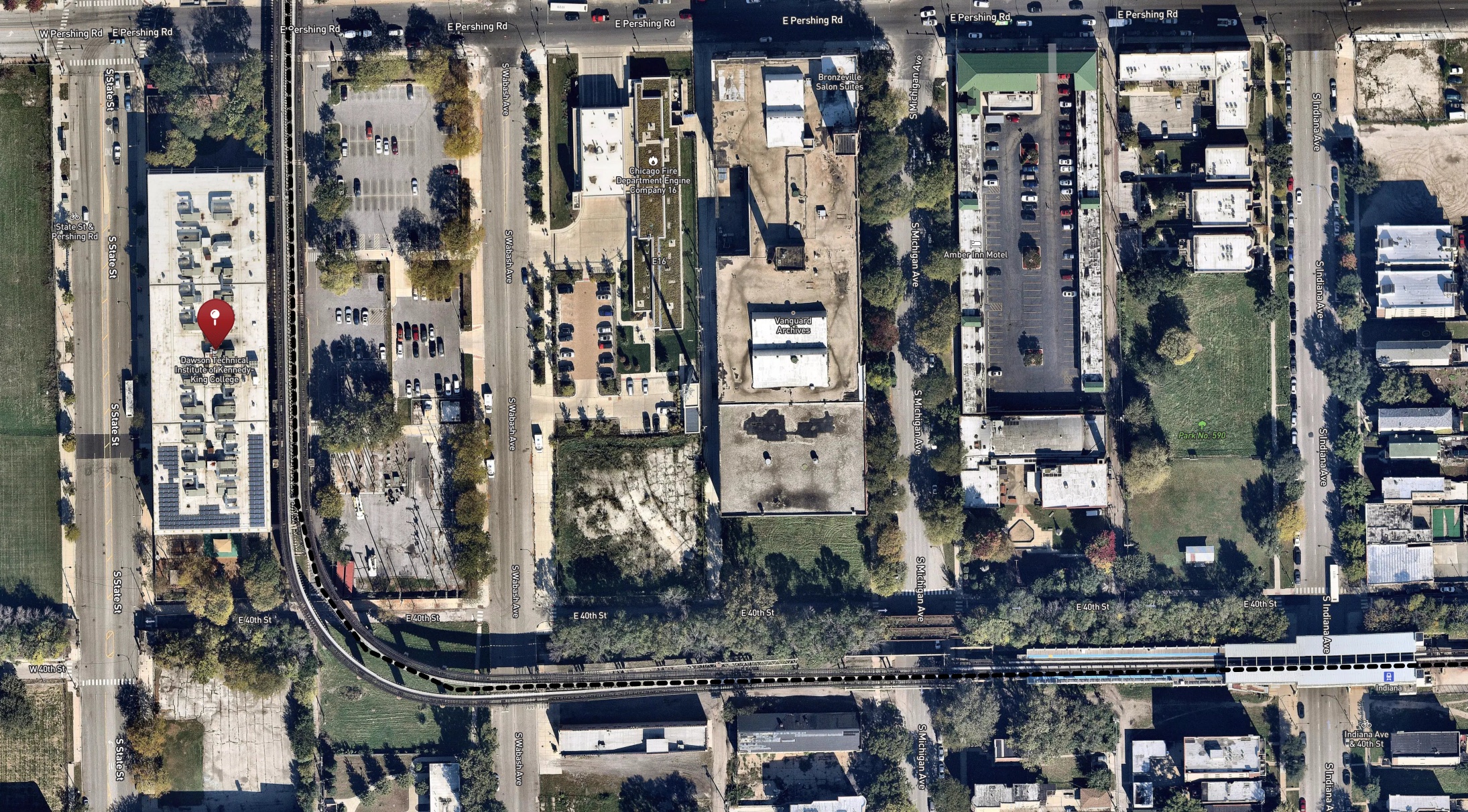
Then there’s Dawson Technical Institute in Bronzeville, which is about 2 blocks from the Indiana Green Line station and several east-west and north-south bus routes.

Image
Dawson also has a massive parking lot, on the opposite side of the Green Line tracks from the building on State Street.

Dawson teaches construction trades, which is perfect because the Green Line can take students to internships and jobs at all of the new construction in Fulton Market that’s ongoing and going to continue for the next three years (at a minimum).

What other good affordable student housing construction opportunities do community colleges in Illinois have?

Upzone the 606

Map of the single family-only zoning around the Bloomingdale Trail

The area in green only allows single-family houses to be built.

Something’s gotta give.

This is all of the land area within two blocks of the Bloomingdale Trail that allows only single-family housing to be built (view full map). This isn’t to say that multi-family housing doesn’t exist here; it definitely does, and there’s probably a handful of two-flats on a majority of the blogs.

All of the five parks of the 606 are within this two block radius, and 49.6 percent of the land allows only single-family housing to be built.

But why build a transportation corridor, a park, a new, expensive, public amenity, and not change the kind of housing – which often determines the kind of family and makeup of a household – that can afford to buy a home near here.

It’s already been shown that detached single-family housing prices have grown intensely the closer you get to the trail. That price growth has meant displacement for some, and “no chance to buy or build a house here” for many others.

There are still plenty of vacant lots within the mapped area; lots that should have a 2-4 unit building built on them, but where only a 1-unit building is allowed.

This map was made possible by the new Zoning Assessment tool on Chicago Cityscape. Read about it or use it now.